
Image Design Brief: Plan a Story Poster Before Generating
Write an image design brief for a narrative poster, choose a reading order and compare three visual directions before generating.
What's new on this page
- 2026-10-29 — Page published. Clarified the guide’s search focus, added a practical FAQ and replaced the embedded video with an image.
An image design brief for a story poster connects a scene to a clear reading order. Define what the viewer should notice first, choose the characters and setting, and use the review sheet below to compare possible directions.
A useful story poster starts with a decision: what should the viewer notice first? This guide gives you an original brief for a fictional midnight train story, three distinct visual directions, and a review sheet you can use before choosing artwork. The prompts are creative starting points for your own experiments.
Image design brief: make the reading order part of the brief
The practical question is narrower than whether an image looks cinematic. Can a viewer identify the main character, understand the tension, and read the title without hunting for it? Those are three separate jobs. Use the brief below to make them visible, then decide which job the first draft handles well.
Build a story before choosing a style
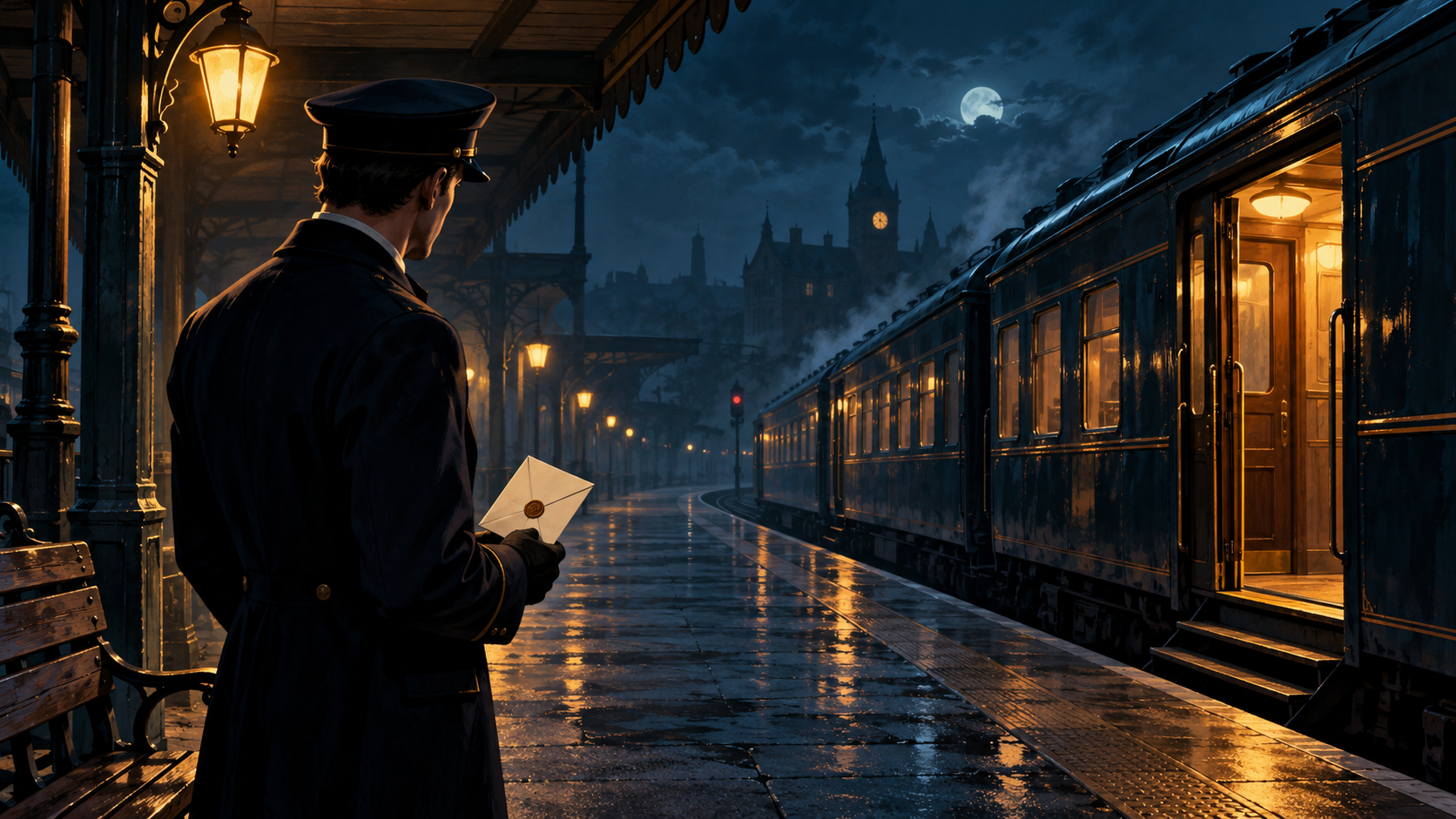
Our fictional premise is simple: a station attendant finds a letter addressed to a passenger who never arrived. The working title is “The Last Platform.” The story depends on absence, so a crowded train station would work against it. An empty bench and an illuminated doorway can do more useful work than dozens of props.
Write these decisions beside your prompt:
-
Decision: Main subject; Brief for this story: One attendant holding a sealed letter; What to inspect: The person and letter remain distinguishable
-
Decision: Unanswered question; Brief for this story: An open train door with nobody entering; What to inspect: The doorway reads as a destination
-
Decision: Visual contrast; Brief for this story: Warm doorway against a cool platform; What to inspect: The contrast directs attention rather than decorating everything
-
Decision: Text priority; Brief for this story: One short title near the top; What to inspect: The artwork leaves a quiet area for lettering
-
Decision: Exclusions; Brief for this story: No crowd, advertisements, or extra writing; What to inspect: Background details do not invent another story
These are editorial choices for this example. They are useful even if you later change the character, location, or generator. Keep the decisions separate from style words so you can tell whether a revision changes the story or only its surface.
Three poster prompt directions to explore
1. Make the letter the focal point
Vertical illustrated poster for a fictional mystery called The Last Platform. In the lower foreground, a station attendant holds one cream envelope under a warm lamp. The empty platform recedes toward a small open train door. Cool blue surroundings, restrained amber light, broad shapes, and a clear silhouette. Leave a quiet dark area across the upper quarter for a title to be added separately. No lettering, logos, crowd, or other papers.
This direction puts the clue before the setting. Inspect whether the envelope is a deliberate part of the composition or merely a bright patch. If it disappears, simplify the attendant's clothing and nearby objects before asking for more decorative detail.
2. Let the empty space tell the story
Wide editorial illustration of an almost empty railway platform at night. A solitary attendant stands far to the left, holding a sealed letter. An open carriage door glows near the right edge. A long unoccupied bench separates them. Use muted teal, warm ivory, and subtle paper texture. Preserve open space above the bench. No text, signage, logos, or additional figures.
Here the distance between two objects carries the tension. Do not judge it with the same checklist as a close-up portrait. Look at whether the attendant and doorway remain distinct when the image is small, and whether the bench interrupts their relationship.
3. Test a short headline inside the image
Portrait mystery poster with the exact title “The Last Platform” in a simple readable heading at the top. Below it, one station attendant faces an empty train doorway while holding a cream envelope. Keep the title on an uncluttered navy area and the doorway in warm amber. Use restrained illustrated shapes. Include no subtitle, credits, dates, logos, or other words.
This is the typography experiment. Compare the title character by character with your brief. A convincing overall shape is not enough: check spelling, missing words, and spacing. If you need to change the title regularly, reserving space and adding editable text yourself may be the more convenient workflow.
Choose an image with a review sheet
Save the exact prompt with each candidate. Then review four things separately: story clarity, silhouette, useful empty space, and text accuracy. Record a concrete observation for each, such as “door merges with the lamp” or “headline touches the roof.” Avoid a single score that hides the reason an image needs work.
Make one revision at a time. If the doorway is unclear, change its placement or contrast; do not simultaneously replace the palette, character, and aspect ratio. That gives the next comparison a specific purpose. This is a proposed evaluation method, not a claim that any prompt reliably fixes a model's output.
Carry the idea into a moving scene
For a separate motion study, visit the alice ai video workspace and check its current model and input options. A useful first brief would describe one action: the attendant turns the envelope over while the camera stays still. Save a more complex train departure for another shot.
You can also explore a standalone illustration in the image workspace. Check the selected tool's current settings and cost before generating.
The finished brief should survive a change of software. Keep the character's purpose, the key object, and the intended reading order. Once those are clear, you have something more useful than a collection of style adjectives: a visual story you can evaluate and revise.
Frequently asked questions
How do you make an image design brief tell a story?
Give the subject a concrete situation and decide which detail reveals it first. Keep the background and visual style in support of that situation, then compare candidates against the same reading order.