
South Park Characters: Reading a Story Through Costume and Contrast
Explore how South Park characters use costume, proportion, and visual contrast to tell a story, with 12 illustrated profiles and original scene-planning ideas.

The cast of South Park is recognizable partly because its characters do not all occupy the image in the same way. Cartman's broad coat fills a frame differently from Kenny's enclosed hood. Wendy's long hair creates a different border around the face from Tweek's scattered spikes. These contrasts give a visual story variety before anyone speaks. For a character with a story of their own, try South Park Character Creator.
This illustrated study uses character artwork from the South Park Public Library. It focuses on what costume, proportion, and grouping can communicate to a viewer. The gallery is a fan reference, with scene ideas based on visual analysis.
Notice the visual relationship between characters
A story image becomes easier to read when its figures have different shapes. Two people can share the same simple eye style while differing in height, clothing, hair, or the width of their outlines. In a group, those differences help the viewer keep track of who is reacting to whom.
Stan Marsh
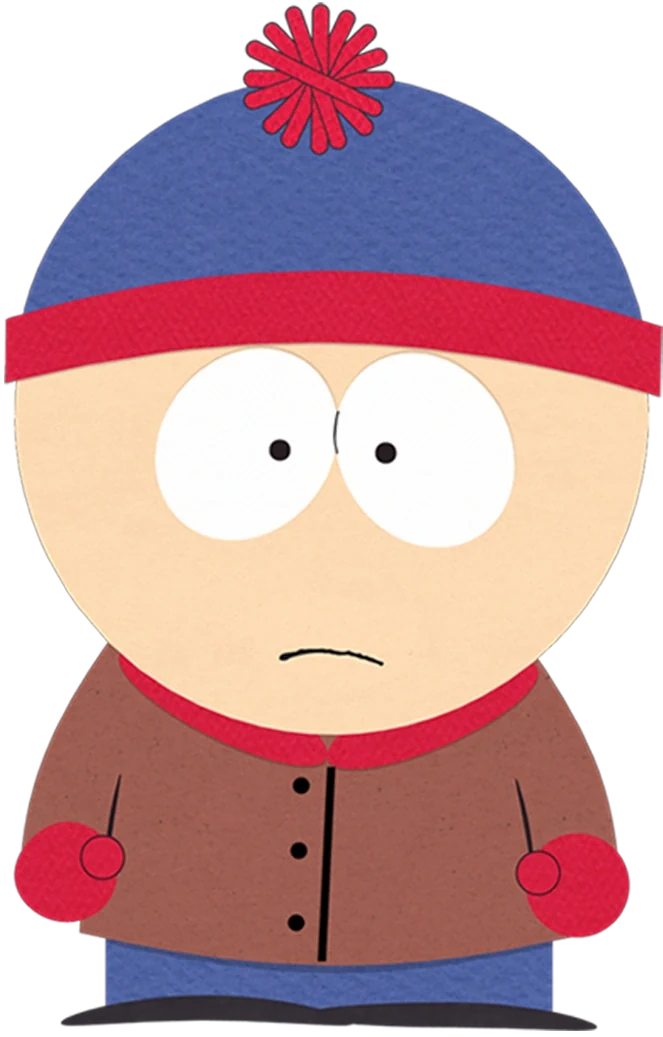
Stan's brown coat keeps the torso quiet while red accents appear on the hat and gloves. In a group illustration, that restrained center offers a useful contrast with a brighter coat nearby. The portrait shows visual balance; it does not, by itself, tell you what Stan is thinking.
Kyle Broflovski
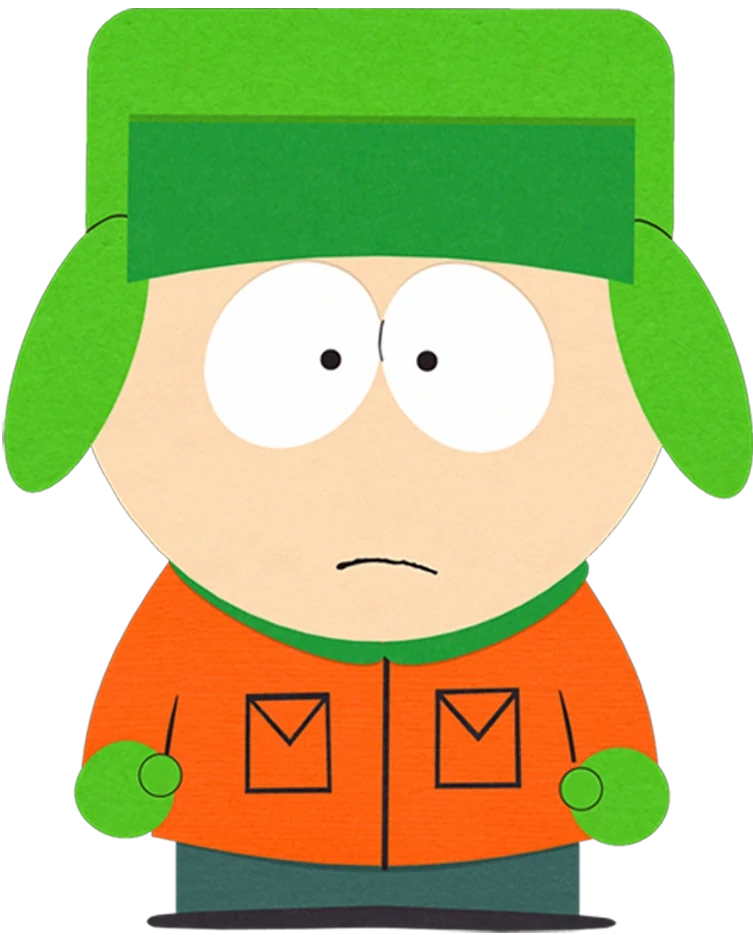
Kyle's green hat and orange coat create a stronger two-color split. The hat widens his head with earflaps, so he differs from Stan in contour as well as palette. Put the two portraits together and the visual relationship is clear even before their names are introduced.
Eric Cartman
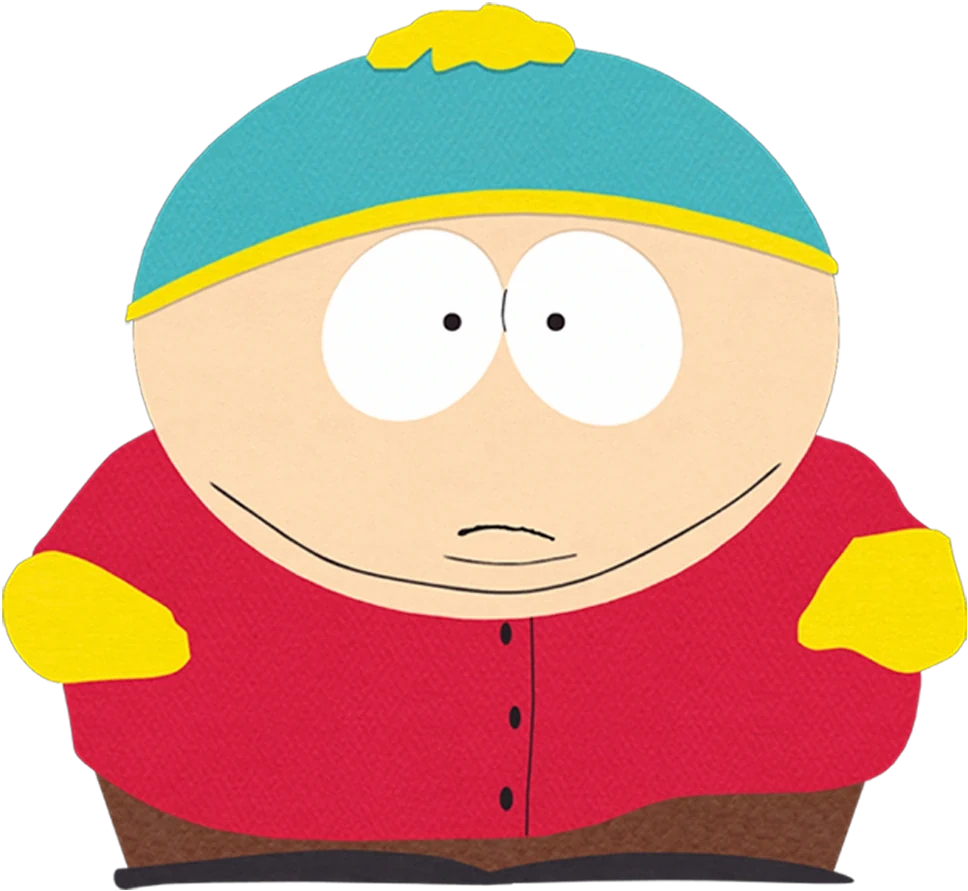
Cartman's wider red jacket changes the spacing in a lineup. Yellow mittens sit near its outer edges, making the breadth especially easy to see. A story composition that gives every character identical space would overlook this difference. Scale each figure according to the portrait rather than the caption length.
Kenny McCormick
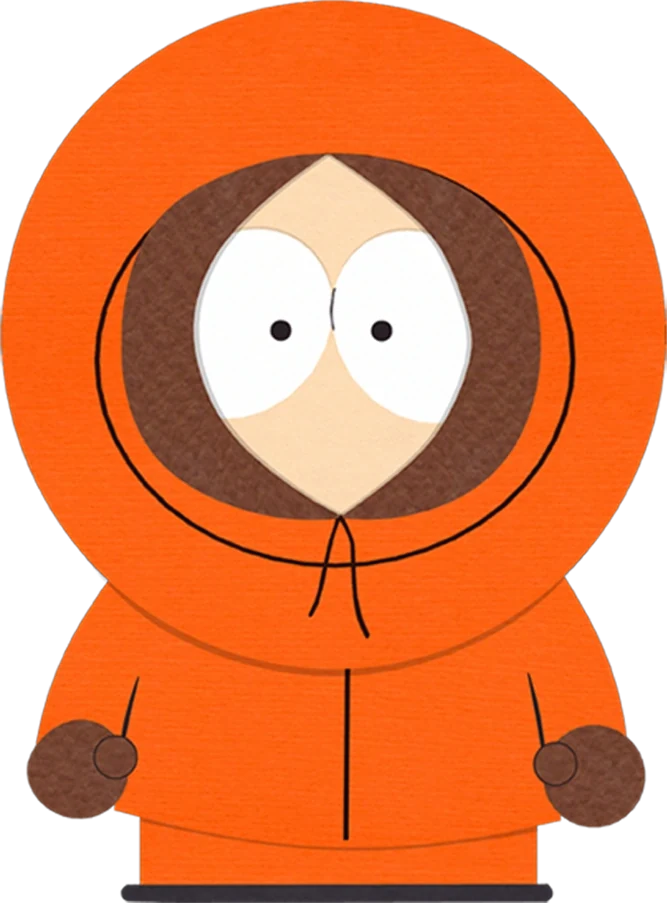
Kenny's orange hood encloses the face and gives the head a continuous border. Beside an uncovered head, that enclosure is immediately noticeable. For visual storytelling, it suggests a practical choice: use body position or a clear prop when the face offers relatively little visible detail.
Open and enclosed silhouettes
Butters Stotch
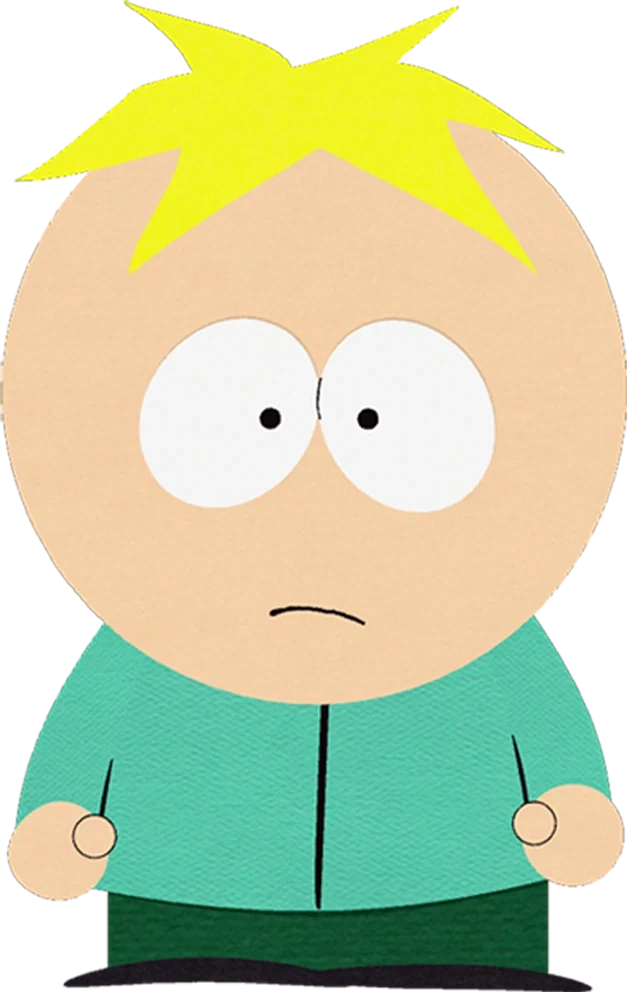
Butters' short blond tuft leaves much of the round head exposed, and the turquoise shirt has a simple front. This open outline differs from Kenny's hood. A comparison between them can teach readers how clothing changes the frame around a face without requiring a complicated facial design.
Wendy Testaburger
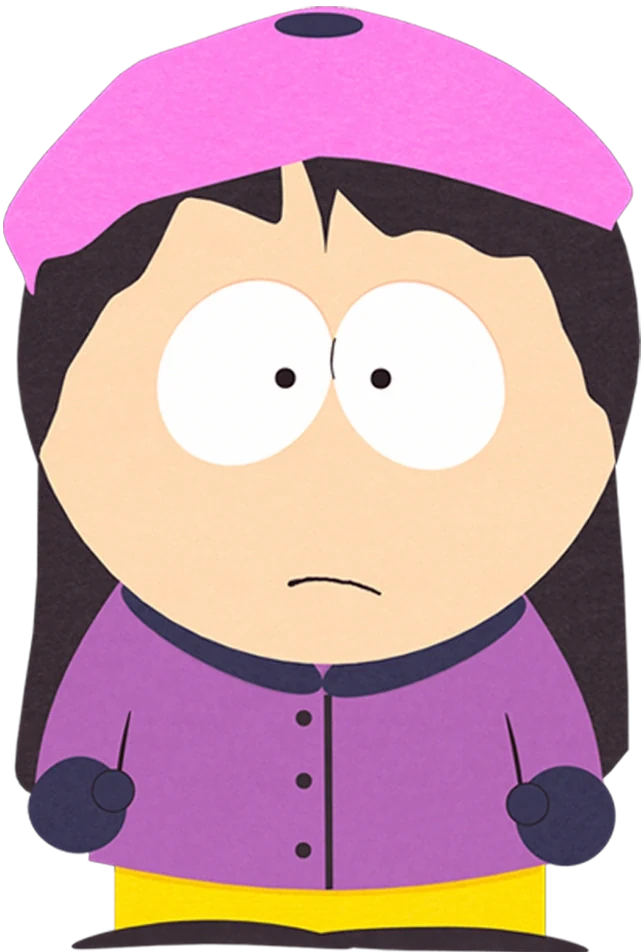
Wendy's pink beret sits above long dark hair, which continues alongside the purple jacket. Her outline connects the upper and lower parts of the figure. In a small group image, preserve enough of that hair length to distinguish the full costume from a close-up of the face alone.
Bebe Stevens
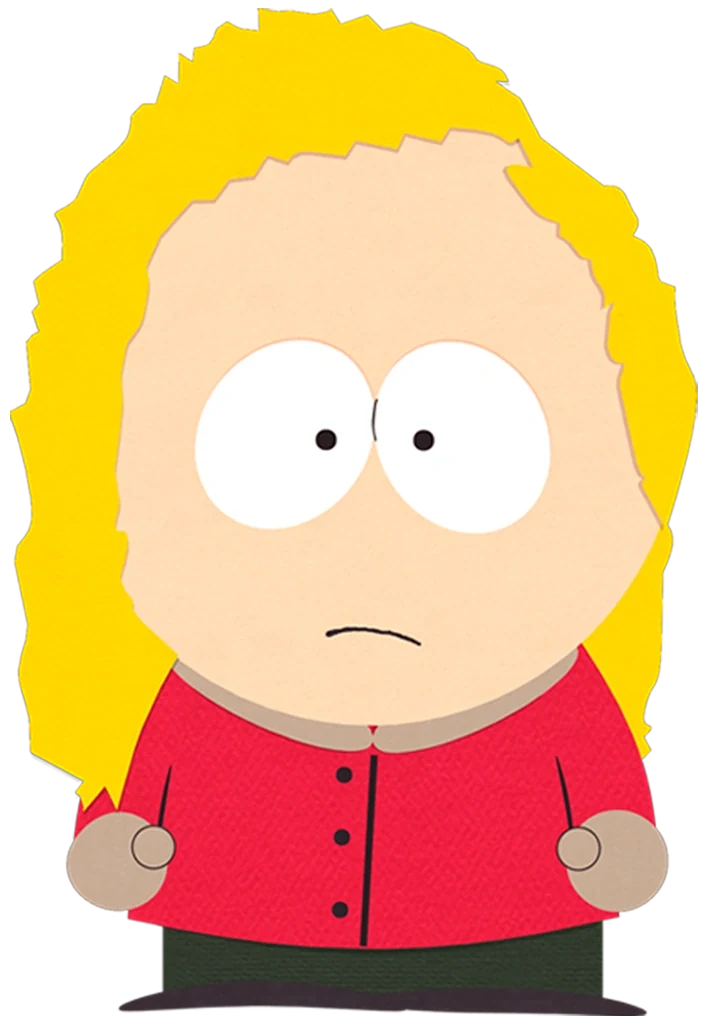
Bebe's blond hair occupies more horizontal space around the head than Wendy's. The red top adds a separate block beneath it. Placing these portraits together offers a useful study in framing: similar face construction can sit inside very different hair shapes and still feel visually coherent.
Tweek Tweak
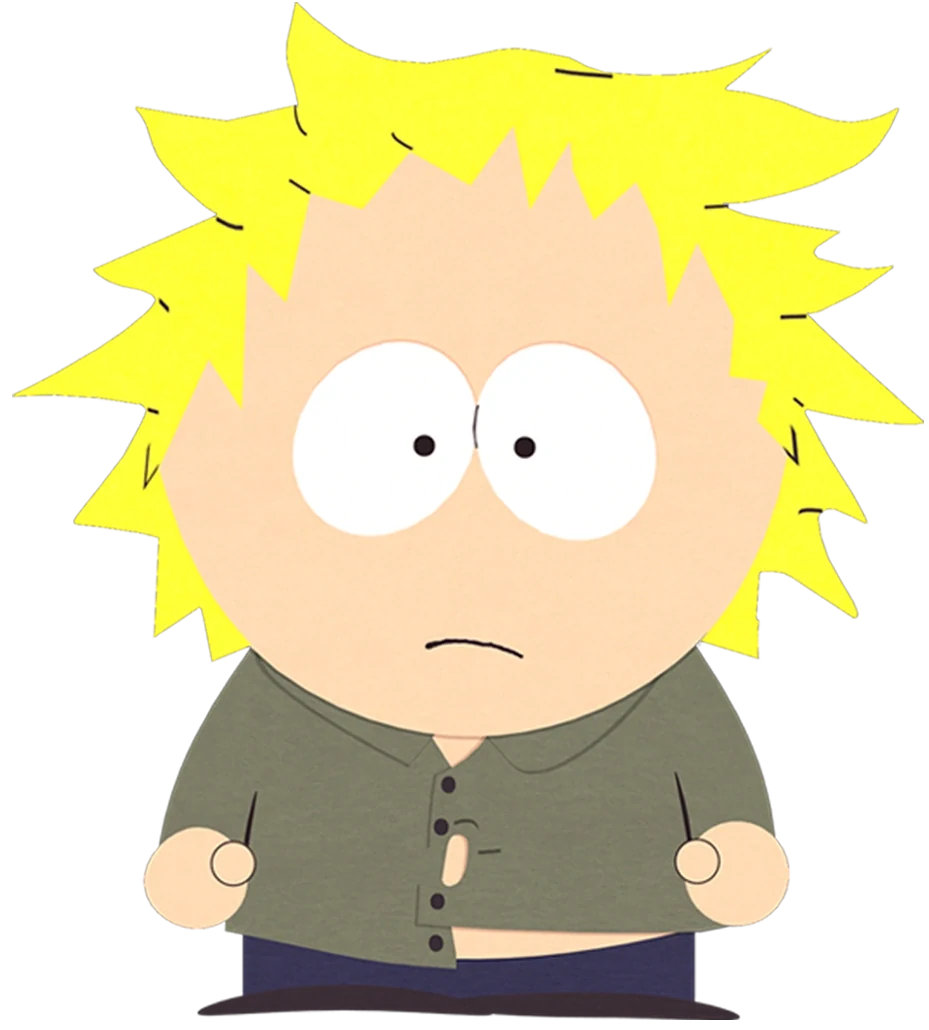
Tweek's hair creates multiple outward points, while the shirt closure introduces a slightly uneven vertical line. Those features give the still image an irregular rhythm. They are visible design choices; describing a specific emotional scene would require additional evidence beyond this neutral, front-facing character artwork.
Give supporting figures their own space
Craig Tucker
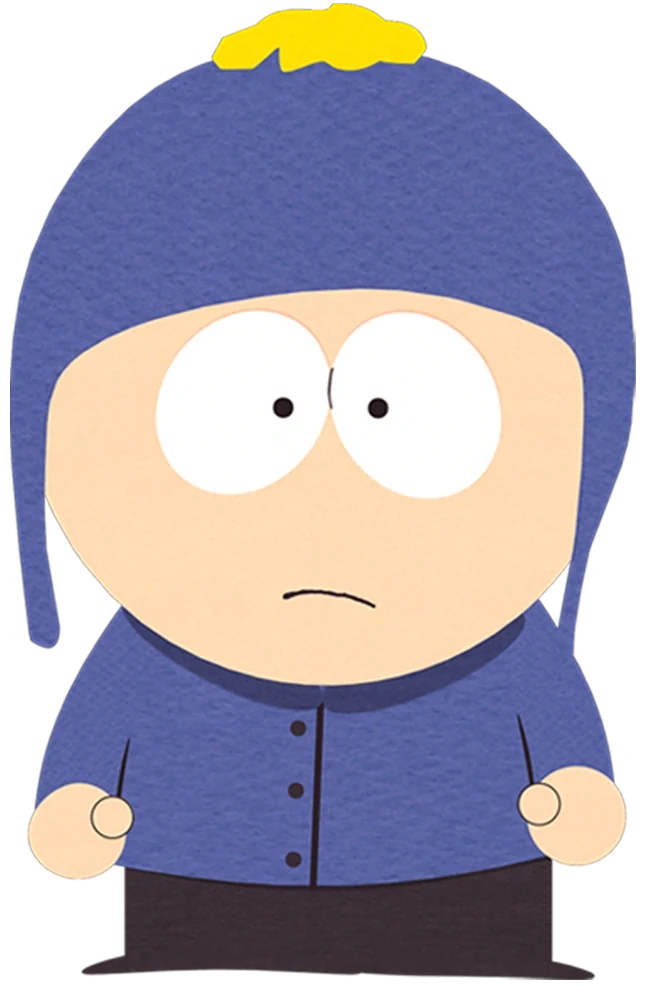
Craig's blue hat and coat make a relatively unified shape. The yellow pom-pom is a small contrasting note above the face. Next to Tweek's uncovered, spiky hair, the hat's cleaner boundary creates a useful contrast. A pairing can be visually interesting without inventing a scene or dialogue.
Tolkien Black
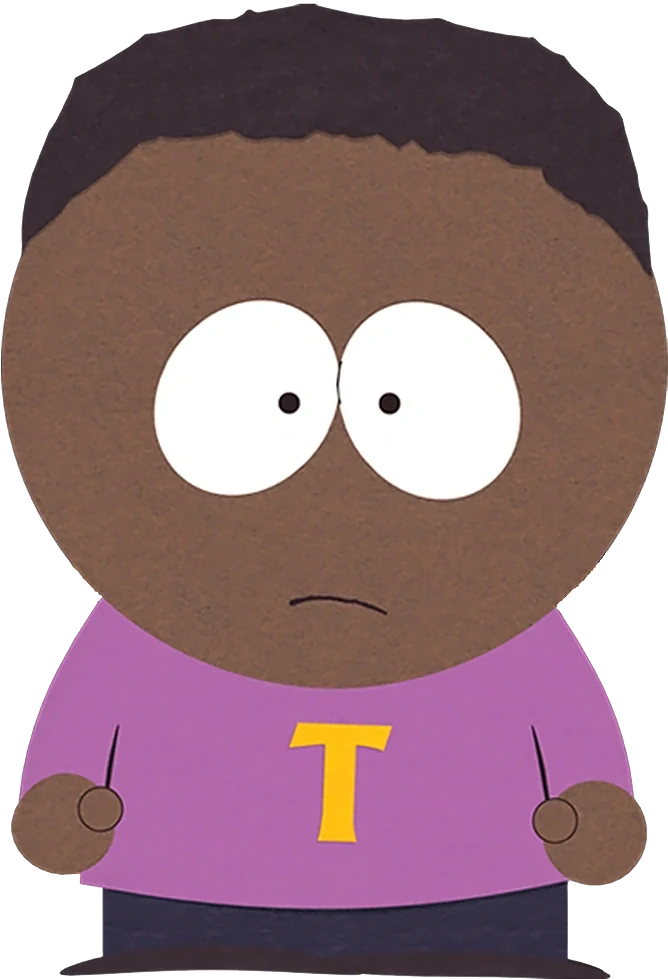
Tolkien's purple shirt carries a yellow T, and his dark hair forms a broad upper shape. The letter offers a detail for close inspection, while the purple area supports recognition at a distance. Use both scales of information when planning a group portrait that might also appear as a thumbnail.
Ike Broflovski
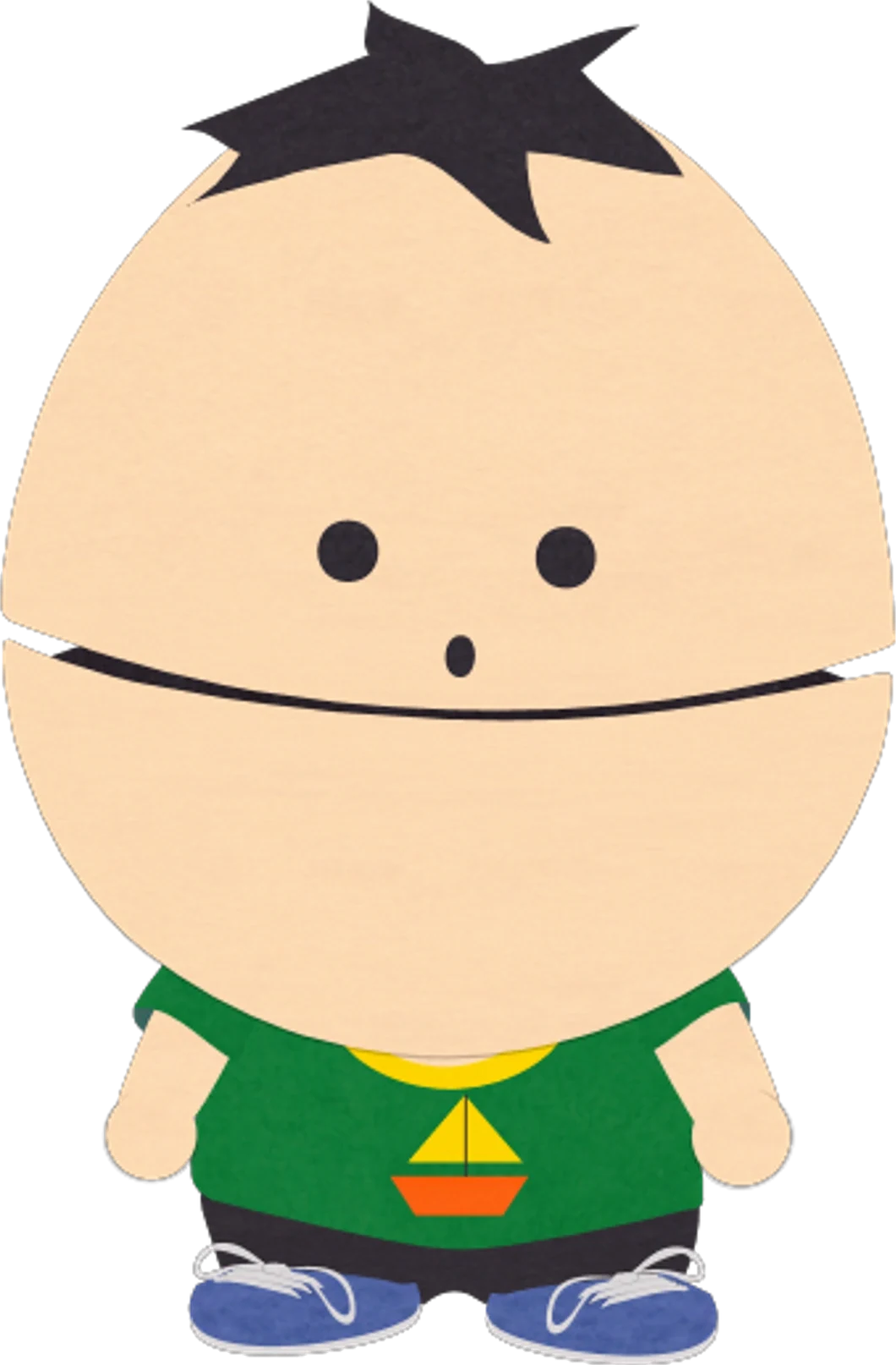
Ike's head-to-body proportions differ from those of the older children. The separated mouth line and small dark hair tuft also change how the face reads. His green outfit includes a sailboat, but that emblem is secondary to the larger structural differences that make the portrait distinctive.
Liane Cartman
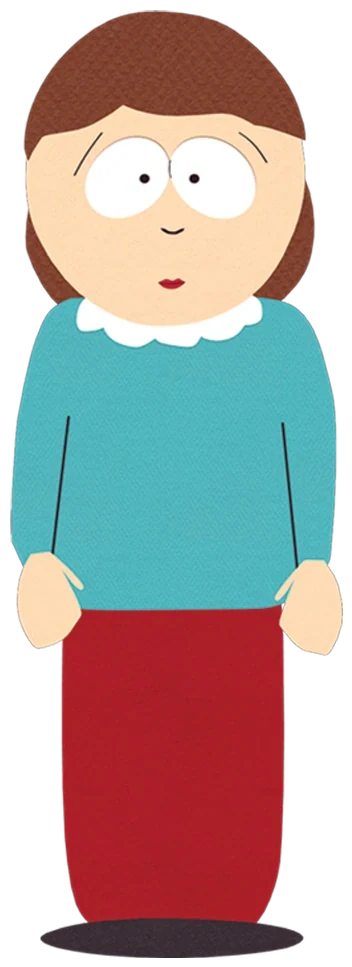
Liane's brown hair, turquoise top with white collar, and long red lower garment create a taller figure. Compared with the children's compact coats, her clothing forms a more vertical arrangement. The contrast is useful for understanding adult and child proportions without making every person in a scene the same size.
Build an original scene around a small action
If you are looking for a South Park character creator, begin with a character who has something to do. An original neighborhood artist might carry one sketchbook, wear a dark green coat, and stop to examine a crooked street sign. The action explains the prop; the palette gives the figure a readable identity.
A South Park character maker brief can then specify a flat cutout appearance, simple eyes, a clear full-body view, and an uncluttered setting. Those visual instructions support the scene instead of competing with it. Adding a crowd, dramatic lighting, and several unrelated objects before the main figure is clear will make evaluation harder.
For a two-character scene, write the relationship in plain language: one person shows a drawing, the other leans closer to look. Assign different dominant colors and keep their hands away from overlapping faces. Judge a resulting image by whether the action is understandable, rather than whether it repeats every adjective in the brief.
You can sketch a new visual idea from the homepage, or explore the blog for more ways to organize a story. The reference gallery provides observations; actual generation options depend on the available tools and models. Choose an outfit that hints at the character’s role when you try South Park Character Creator.
Give two figures a readable relationship
For a simple original scene, imagine one student showing another a drawing. The drawing is the shared object, so place it where both figures can plausibly see it. Give the students different dominant coat colors and distinct head outlines. Their hands should explain the exchange without covering either face. These choices establish who is showing, who is looking, and what connects them.
Now remove the caption mentally. If the relationship still reads, the picture is doing useful storytelling work. If the viewer cannot tell what either person is holding, enlarge or reposition the drawing before adding background detail. If the figures merge into one shape, separate their outlines or revise the color contrast. The gallery's cast differences offer a practical lesson here: a coherent shared drawing language can still accommodate distinct silhouettes. Similar eyes do not require identical clothing, proportions, or spacing.
Recognize the difference between a cast image and an episode image
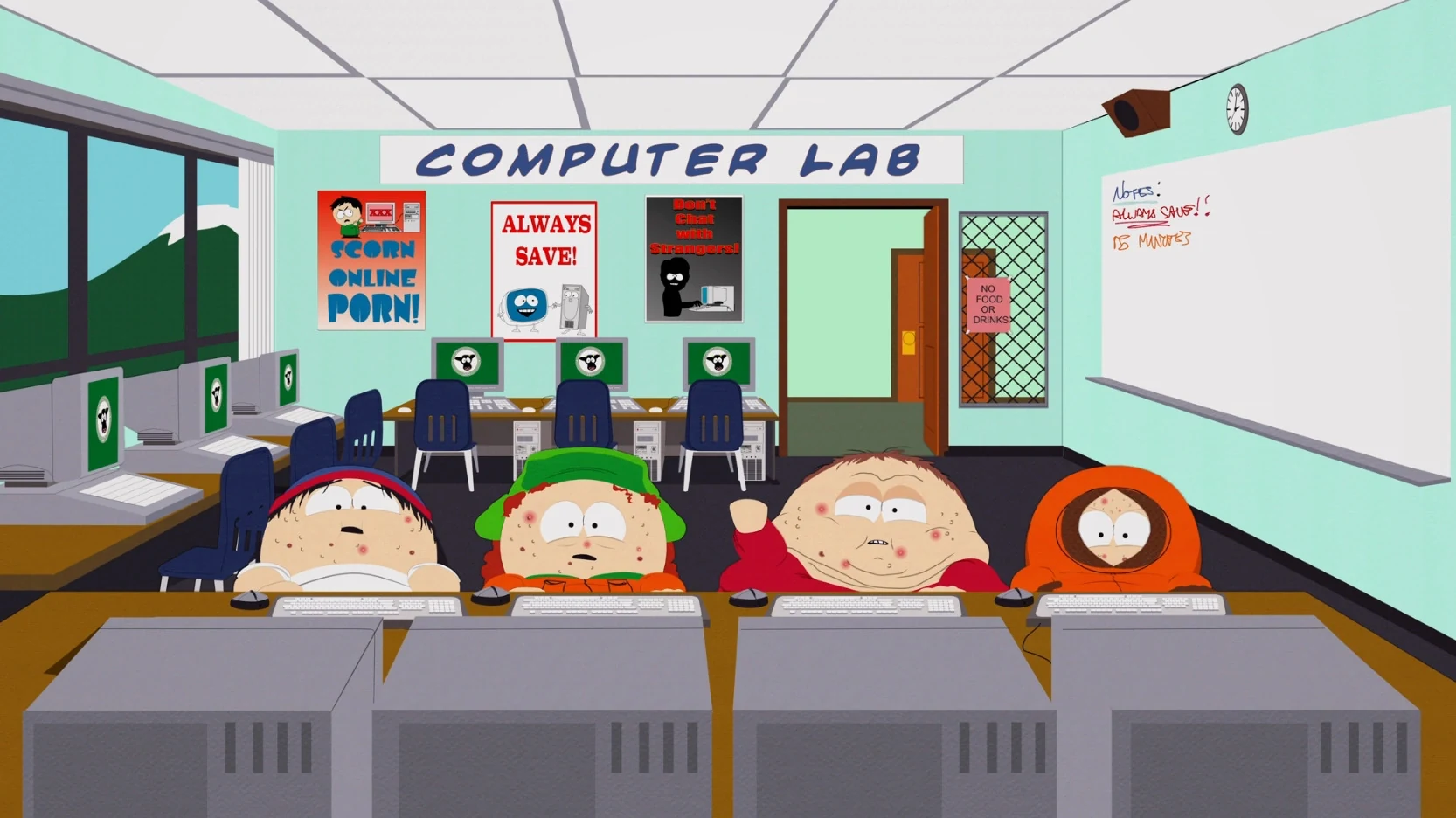
The South Park World of Warcraft story appears in Make Love, Not Warcraft. A powerful player repeatedly kills the boys' game characters, prompting Cartman to organize a plan for the group to become stronger. The episode connects their familiar identities with an increasingly obsessive gaming project.
The computer-lab frame tells more than a portrait can. Computers, shared seating, and changed appearances establish a specific situation. Familiar clothing keeps the boys recognizable: Kyle's green hat and Kenny's orange hood are particularly clear, while Cartman's red coat identifies him even without his cap.
For a South Park maker story image, notice how the setting and figures work together. The room explains the activity; the clothing helps identify the people. A standard Cartman South Park portrait is useful for costume study, but this frame adds the context that gives the group image its meaning. To develop a character with a story of their own, try South Park Character Creator.