
Blocky Character Concept: Translate a Mascot into a Role
Develop a blocky character concept from a mascot by separating identity cues, costume and accessories with a practical translation checklist.
What's new on this page
- 2026-10-29 — Page published. Clarified the guide’s search focus, added a practical FAQ and replaced the embedded video with an image.
A blocky character concept can preserve a mascot's recognizable features while giving it a new role. Choose a few identity cues, then use the translation checklist to separate them from clothing and accessories.
This guide offers an original mascot-to-character brief built around a woodland librarian. It produces design decisions and concept artwork. If you need a game character texture, use a separate texture workflow and check the intended model's layout and import requirements.
Blocky character concept: choose a role before adding accessories
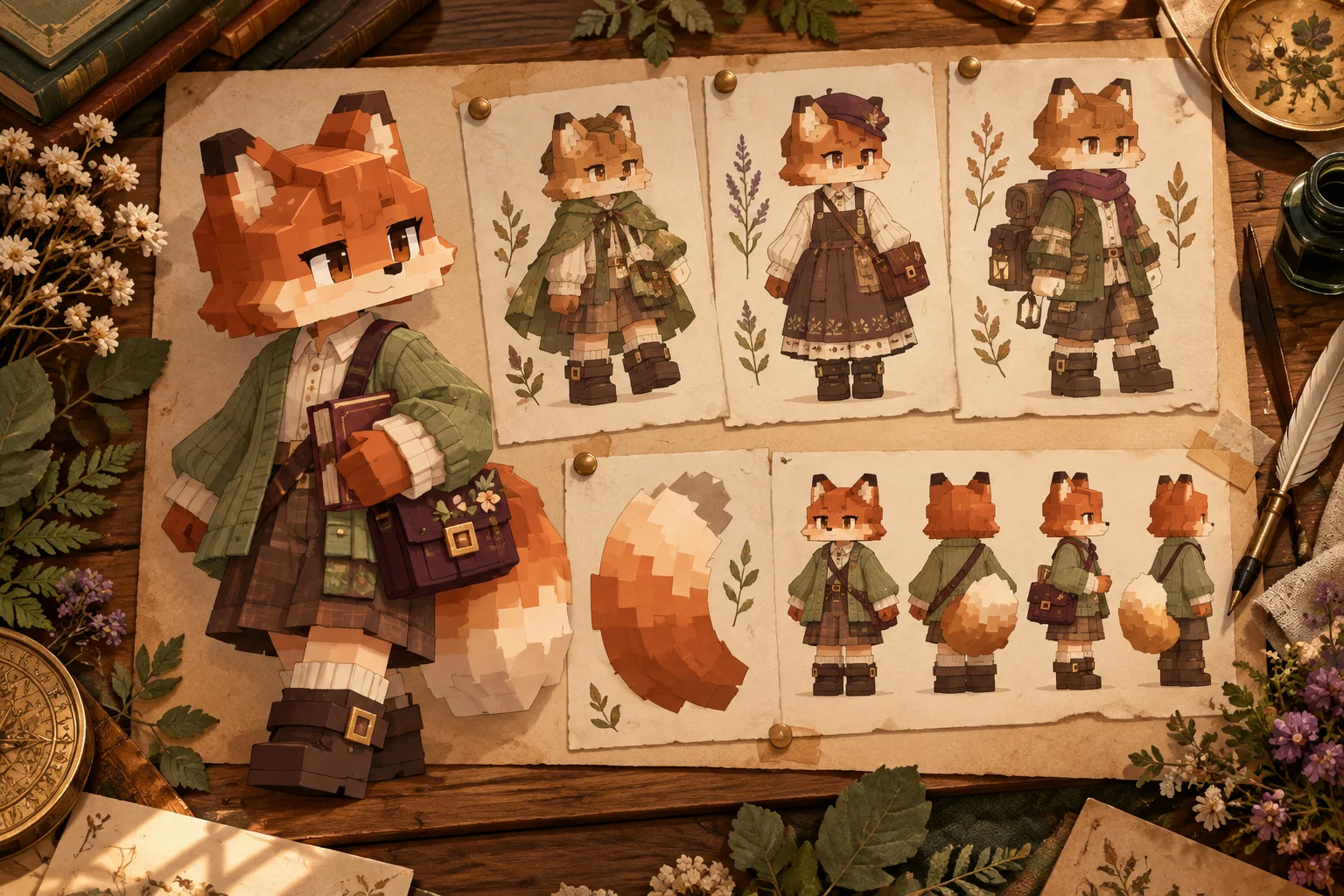
Our fictional character is a fox-inspired librarian with rust-orange coloring, cream cheek patches, a sage cardigan and a plum book satchel. The role explains the clothing and prop. Without that role, a list of hats, belts, badges and books can become a collection of unrelated decorations.
Write a short purpose statement: “A quiet woodland librarian who carries one small book satchel.” Then choose the traits that should survive simplification. For this character, the cream cheek shapes and orange head matter more than fur strands. The sage cardigan distinguishes the role from a generic animal mascot.
The companion illustration is a concept board. Its projecting ears and tail are expressive design ideas, not evidence that a standard skin texture adds new body geometry. If the destination uses a fixed humanoid model, plan how those ideas become colors or markings within that model rather than promising the illustrated silhouette in-game.
Separate identity from costume
Use two short lists. Identity contains the traits that should remain across versions: orange head, cream cheeks, dark ear tips and a calm expression. Costume contains the librarian choices: cardigan, satchel and simple boots. This separation makes it possible to explore another outfit without losing the mascot.
Avoid treating every color in a photograph as a required marking. Light, shadow and background reflections can create temporary patches. Choose the broad shapes that make the subject recognizable, and note where you are inventing a humanoid interpretation rather than copying anatomy.
If you start from a real pet photo, use one where the important face markings are visible. A hidden side remains unresolved. Decide whether to mirror a marking or design a different continuation, and record that choice so later views can follow it.
Build a translation checklist
-
Source idea: Cream fox cheeks; Character interpretation: Two broad light areas beside the face; Question before finalizing: Do they remain clear at small size?
-
Source idea: Dark ear tips; Character interpretation: A restrained dark accent near the upper head; Question before finalizing: Can the intended model represent the shape?
-
Source idea: Large tail; Character interpretation: A cream-and-orange motif or a concept-only silhouette; Question before finalizing: Does the final deliverable support actual extra geometry?
-
Source idea: Woodland role; Character interpretation: Sage cardigan with a simple front opening; Question before finalizing: Is the outfit readable without tiny trim?
-
Source idea: Librarian prop; Character interpretation: One plum satchel or a simple clothing motif; Question before finalizing: Is it part of the texture or only the illustration?
The checklist prevents an appealing illustration from quietly promising an unsupported game feature. It also gives a skin artist a clear explanation of what can be adapted and what is essential to the design.
Explore the character in a still image
Use the Alice AI image workspace with the mode and model currently offered there. A text-based concept can start from the role statement. If you choose an image-reference mode, use a source that clearly shows the selected markings and inspect its upload requirements.
Here is an original suggested brief:
Create a full-body blocky woodland librarian concept inspired by a fox. Use a rust-orange head, broad cream cheek patches, a sage cardigan and one plum book satchel. Keep the shapes readable and the expression calm. Use a warm neutral background. Avoid lettering, logos and busy decorative trim. Treat this as character concept art.
This is a creative starting point, not a tested skin conversion. Review the current generation quote before submitting. The pricing page covers purchase options; the active workflow shows the applicable request settings.
Review the design without the story
Look at the image without reading the prompt. Can you identify the cheek patches and cardigan? Does the satchel stand out without dominating the face? If a viewer needs a paragraph to understand the character's main visual idea, simplify the costume before adding more detail.
Compare candidates at the same size. Change one choice at a time: the cardigan shape, the satchel placement or the amount of cream around the face. Keep the role and main markings stable so the comparison answers a useful question.
If you later explore the character in the video workspace, write a separate motion brief and inspect the actual result. A still concept does not establish that accessories or markings remain stable through movement.
Finish with a clear handoff note
Save the approved concept with three lists: traits to preserve, features to adapt, and unresolved areas. For the librarian, preserve the cheek patches and cardigan colors; adapt projecting ears or a tail to the chosen model; resolve the back of the outfit and satchel position deliberately.
Use a proper skin editor for the final texture and review it on the matching character model. Keep that texture separate from the illustrated concept board. The design brief should make the next creator's decisions easier while preserving the small set of traits that gave the character its personality.
Frequently asked questions
How can a blocky character concept keep a mascot recognizable?
Choose a small set of identity cues that remain readable at the intended size. Treat clothing and role-specific props as separate choices so they do not obscure the character’s defining features.